
It could be a pile of unopened mail. A fridge that’s a bit too empty. A bruise they can’t quite explain. You find yourself wondering if it’s a one-off or if it’s time to think about some extra support.
But you don’t need to wait for a crisis. Arranging home care early (when things are starting to slip, not after a fall or a hospital visit) makes the transition much easier for everyone. And asking for help isn’t giving up on your parent’s independence. Quite the opposite. You’re protecting their independence.
These are the signs worth paying attention to.
Physical signs
1. Unexplained weight loss or poor nutrition
If your parent is losing weight without trying, or you notice the pantry is sparse and meals aren’t being made, it could mean they’re struggling with cooking, shopping, or simply forgetting to eat. Nutrition has a significant impact on energy, immunity and cognitive function, so this one matters more than it might seem.
2. Frequent falls or near-misses
A fall can be a turning point. But the warning signs often come earlier: unsteadiness getting up from a chair, scuff marks on doorframes, or an offhand comment about “nearly going over” on the back steps. Balance issues tend to get worse without support, and the consequences of a fall can be serious.
3. Difficulty with personal hygiene
If your parent has always taken pride in their appearance but is wearing the same clothes repeatedly, smelling unwashed, or letting their hair and nails go, it may not be neglect. It may be that bathing and dressing have become genuinely difficult, tiring, or unsafe on their own.
4. Chronic health conditions that seem harder to manage
Medications not being taken correctly. Appointments being missed. A condition that was once stable now feeling more serious. Managing complex health needs takes cognitive and physical effort, and it can quickly become overwhelming.
Home and daily life signs
5. The house is becoming cluttered, dirty or unsafe
A home that’s always been tidy is now hard to navigate. Dirty dishes. Bin overflowing. Trip hazards appearing on the floor. Keeping a home clean and safe requires energy and mobility. And when that starts to slip, the environment itself can become a risk.
6. Bills unpaid or important things forgotten
Missing a bill payment or two might seem minor. But if financial management, appointments or important tasks are regularly falling through the cracks, it can signal cognitive changes that go beyond ordinary forgetfulness and create real problems if left unaddressed.
7. Reduced mobility making daily tasks hard
Simple things such as getting to the letterbox, preparing a meal and doing laundry can become significant hurdles when mobility declines. If your parent is avoiding activities they used to do without thinking, it’s worth exploring what support could help.
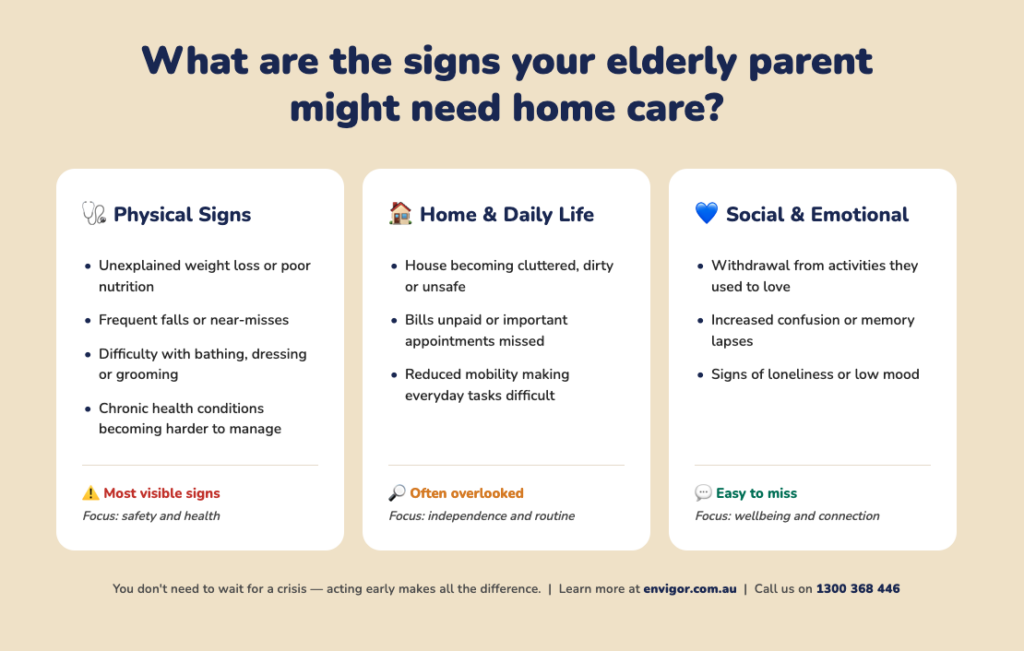
Social and emotional signs
8. Withdrawal from activities they used to love
Has your parent stopped going to their regular social group? Stopped calling friends? Lost interest in hobbies they’ve had for years? Social withdrawal is often one of the earliest signs that something isn’t right, and isolation itself can accelerate decline.
9. Increased confusion or memory lapses
Everyone forgets things occasionally. But if your parent is regularly confused about the day, repeating the same questions in a single conversation, or getting disoriented in familiar places, it’s worth speaking with their GP and thinking about what extra support at home might help.
10. Signs of loneliness or low mood
Loneliness among older Australians is more common and more serious than most people realise. If your parent seems flat, tearful, or keeps mentioning how much time they spend alone, that’s important information. Home care isn’t just practical support; it also brings regular human connection into the day.
What to do once you’ve noticed the signs
You shouldn’t panic or jump to conclusions about what it all means. One or two of these signs might mean nothing. A cluster of them, or a noticeable change over a short period of time, is more significant.
Start with a simple conversation. Let your parent know what you’ve noticed, and that you’re coming from a place of love, not alarm. Many people are relieved when someone finally says something.
Then, consider contacting My Aged Care on 1800 200 422 or myagedcare.gov.au. They can arrange a free assessment at home to work out what level of support would help and whether government funding is available to cover it.
If you’d prefer to talk it through with someone local first, Envigor’s Care Services Managers are based across Queensland and are always happy to have an honest conversation about what you’re seeing and what options are available.
What happens next
Once your parent is assessed through My Aged Care, they may be assigned funding for home care services, which can cover everything from help with personal care and meals, to transport, nursing support and companionship visits. You choose the provider. You’re in control of the plan.
The sooner you start, the more choices you have.
Frequently asked questions
What if my parent refuses help?
This is very common, and it’s okay. Many people initially resist the idea of a carer coming into their home. Give it time, keep the conversation gentle, and focus on one specific thing you’re worried about rather than the whole picture. Our Care Services Managers can offer advice for your particular situation.
How quickly can care start?
Once funding is in place, care can often begin within days. If the situation is more urgent, speak to Envigor directly. We’ll do our best to help as quickly as we can. You may want to consider paying for services while you wait for funding to be allocated.
Does home care mean they have to leave their home?
No. In-home aged care is specifically designed to help people stay in their own home for as long as possible. That’s the whole point.
How do I know if home care is enough?
Home care works well for most levels of need and with the right support in place many people stay at home far longer than their families expected. A good starting point is an aged care assessment through My Aged Care. The assessor will help you understand what level of care is appropriate. Envigor’s Care Services Managers can also talk this through with you honestly, including if they feel residential care would be a better fit.
What if my siblings and I disagree about what mum or dad needs?
This is more common than you might think, especially when family members live in different places and see different things. Try to start with the facts – specific things you’ve noticed – rather than opinions. A Care Services Manager can also speak with the whole family together, which sometimes helps everyone get on the same page.
My parent lives alone. Is home care still an option?
Absolutely. In fact, people living alone are often the ones who benefit most from regular home care visits, both for the practical support and for the human connection it brings.
How do I start the conversation without upsetting my parent?
Keep it low-key and lead with what you’ve noticed, not what you’ve decided. Something like: “I’ve just been a bit worried about you lately. Can we have a chat about it?” Avoid framing it as a big announcement. Many people are more open to the idea than their families expect, especially if they’ve been quietly struggling themselves.